

Know your Boroughs in Toronto: Location, Food, and Vibes
Every neighbourhood in Toronto has a personality. This guide helps you figure out which ones are yours. Not a ranked list. Not a best-of. A matching exercise between who you are and where you'll actually enjoy being.
Toronto is a city of villages that grew into each other. Within the boroughs of Toronto, from the City of Toronto's downtown core to its outer neighborhoods, each district carries its own history, its own pace, its own version of what a good day looks like. Kensington Market doesn't feel like King West. Greektown doesn't feel like Yorkville. Scarborough doesn't feel like anywhere else.
The transit times below are from Dundas Square, which sits roughly at the city's geographic centre. Every neighbourhood in this guide is reachable from there without a car.
How to Use This Guide
Find Your Neighborhood: Start with "What Makes It Great". one sentence that captures what the neighborhood fundamentally is. Read "The Vibe" and "The Area" to get a quick sensory sense of the place. Scan the "If You're" sections and find the one(s) that match your intention. Check "Getting There" for logistics.
Plan Your Day: Neighborhoods are containers for experiences, not checkbox destinations. Use "Nearby" to pair neighborhoods logically. Different neighborhoods work at different times. read the notes for seasonal/timing considerations.
For Creators/Boardmakers: Use this guide as reference material for your neighborhood boards. The specific spots and experiences mentioned here are starting points. discover more as you explore. The "Nearby" connections help you create day-routing boards. Each neighborhood has a distinct character. let that inform your curation.
Midtown
Where most of the city's independent food, culture, and street life concentrates. These are some of the best neighbourhoods in Toronto for first-time visitors. Downtown-adjacent, the heart of old Toronto's independent character. Walk to everything. Start here if you want to understand what makes Toronto different from everywhere else.
Kensington Market, Little Portugal, Queen West, and King West form the dense core of Toronto's neighbourhoods within walking distance. No car needed. Everything connects. The streets here were built for people, not traffic. This is where you'll find the mix of old and new, authentic and curated, working and playing that defines Toronto at its best.
Old Town and St. Lawrence Market
Distance: Five minutes east of King West, or ten minutes south and east from Kensington on foot.
What Makes It Great: The oldest continuously inhabited neighbourhood in Toronto. St. Lawrence Market has been here since 1803. This is where Toronto began.
The Vibe: Historic. Working. Street-oriented. The market has vendors who've been there for decades next to newer food entrepreneurs. Georgian and Victorian architecture. People actually shop here for groceries, not for Instagram.
The Area: Centred on St. Lawrence Market and the streets immediately surrounding. Front Street from the Distillery east to the Esplanade. The Gooderham Building (Flatiron Building) anchors the corner. Historic row houses converted into shops, restaurants, apartments. The waterfront is blocks south.
The Best:
St. Lawrence Market: Operating since 1803. Saturday mornings are busiest. Vendors selling produce, meat, cheese, prepared food. Local families actually shop here.
Peameal bacon sandwich: From the market counter. Grab one and eat standing outside.
The Gooderham Building: The iconic Toronto flatiron structure at Front and Wellington. Photograph it from the corner looking up.
Taverna: Italian restaurant on Wellington. No pretense, real food, been here for years.
If You're Wandering: Walk through the market slowly. Stop at vendor stalls. Read the signs. Talk to people. The market tells the story of who lives in Toronto through what they're selling and buying. Walk the surrounding streets. They're narrower than downtown, older architecture, less tourist traffic than King West or Kensington.
If You're Hungry: The market is food. Peameal bacon sandwich is the classic. Also stop at the various counters: Greek, Portuguese, Chinese, Italian vendors all selling prepared food. Taverna nearby for sit-down Italian. The Distillery District is a five-minute walk south if you want more restaurant options.
If You're Going Out: Taverna for wine and casual dining. Various smaller bars along Front Street. The energy here is less intense than King West but more local than downtown tourist areas.
Getting There: King Streetcar east to Jarvis, then walk south to Front. On foot 10 minutes from King West, 15 minutes from Kensington. Subway: King station on the red line.
Nearby: King West is immediately west. The Distillery District is five minutes south. The Waterfront and Harbourfront Centre are blocks south. Kensington is west and north.
Kensington Market
Distance: Fifteen minutes west of Dundas Square on foot, or ten by streetcar. Come without a plan.
What Makes It Great: Every city has a neighbourhood that resists becoming something else. Kensington is Toronto's.
The Vibe: No chains. A fishmonger, a vintage rack, and a taqueria share the same half-block. No performance, no pressure to spend.
The Area: Fifteen square blocks of Victorian row houses converted into shops between Spadina, Bathurst, College, and Dundas West. The streets were built for foot traffic and handcarts, not cars.
The Best:
- Seven Lives Tacos: Baja-style counter on Baldwin. The gobernador is smoked marlin, cheese, chipotle. Cash only, no seating.
- Bellevue Square Park: Bronze Al Waxman watches from the northwest corner. On warm Sundays during Pedestrian Month it fills with musicians and vendors.
- Courage My Love: Vintage clothing on Kensington Avenue since 1974. Denim, leather, deadstock, jewellery, fabric sold by the pound in the back.
If You're Wandering: Rotate This on Kensington Avenue has vinyl records: new releases and deep back catalogue. Alex Farm Products on Augusta stocks cave-aged cheese. House of Spice has spices from around the world organized by region. Nassau Street has murals painted over murals for decades. Walk the side streets.
If You're Hungry: Seven Lives for the fish tacos. Sunny's Chinese inside Kensington Market Mall for Michelin Bib Gourmand Cantonese comfort food that's easy to walk straight past if you don't know it's there. Nish Dish on Augusta for bannock fry bread tacos.
If You're Going Out: Bar Poet on Augusta for natural wine and small plates. Ronnie's Local 069 for live music in a room that barely holds a hundred people. Jazz, blues, the occasional experimental set. Pedestrian Sunday evenings (last Sunday of the month, May-October) when the streets stay busy long after vendors pack up.
Steal This Idea:
- Moonbean Coffee: arrive before the neighbourhood wakes up
- Nassau Street: murals painted over murals. The walls change every year.
- Kiever Synagogue: built 1924-1927, National Historic Site, worth a look at the exterior
- Seven Lives Tacos: the gobernador, beat the queue by thirty minutes
- Augusta Avenue: Courage My Love, Alex Farm Products, Rotate This, no agenda
- Bellevue Square Park: Al Waxman in the corner, sit as long as you want
Getting There: 15 minutes on foot from Dundas Square west along Dundas then north on Augusta. 510 Spadina streetcar to College.
Nearby: Chinatown is immediately east on Spadina. Dim sum before Kensington makes a strong half-day. Little Portugal is ten minutes south and west, the natural next neighbourhood if this one suits you. The Annex is ten minutes north, quieter, good for the afternoon after a Kensington morning.
Little Portugal and Dundas West
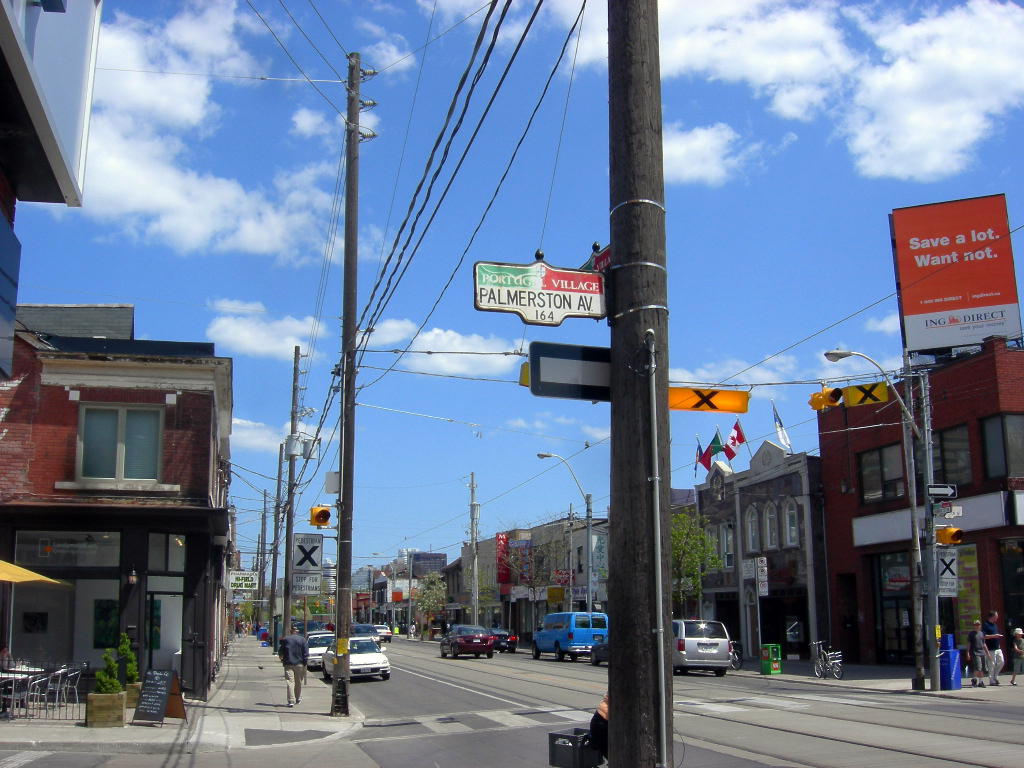
Distance: Thirty minutes west of Dundas Square on foot, twenty by streetcar. Dundas West runs from Kensington through Little Portugal and beyond.
What Makes It Great: The Portuguese community has been here since the 1950s, and the food scene that grew from it finally got the attention it deserved. Not because they changed, but because the city caught up.
The Vibe: Hand-painted azulejo tiles on restaurant fronts dating to the 1950s. Portuguese families who've been here since the 1950s. Chefs eat here on their nights off.
The Area: Hand-painted azulejo tiles on restaurant fronts dating to the 1950s next to newer work. Old-school Portuguese bakeries and newer chefs who moved in when rents were reasonable.
The Best:
- Taberna LX: duck rice, house-cured chorizo, hand-painted tiles on the walls. A Portuguese restaurant that proves authenticity doesn't require compromise.
- Cafe Belem: pastel de nata, best eaten standing outside.
- Alma Lusa: grab-and-go bifanas. Toronto's first Portuguese snack bar.
- Patois: Asian-Caribbean menu that doesn't fit any category cleanly and doesn't need to.
If You're Wandering: Walk the storefronts and read the azulejo tiles on building fronts. They tell the history of the neighbourhood across decades. The newer hand-painted tiles sit next to the originals from the 1950s. Stephen Bulger Gallery on Dundas West has fine art photography with free entry and rotating shows worth stopping into.
If You're Hungry: Taberna LX for the duck rice. Cafe Belem for the pasteis. Alma Lusa for grab-and-go bifanas. Patois for the Asian-Caribbean menu that doesn't fit any category cleanly and doesn't need to.
If You're Going Out: Lula Lounge on Dundas West has live salsa, Brazilian, and jazz with dinner and show packages on weekends and a beginner dance lesson included if you want it. One of the more fun nights out in the city for a visitor who doesn't know the local bar circuit yet.
Getting There: 505 Dundas streetcar westbound from Spadina for about 20 minutes. On foot 30 minutes from downtown. Lansdowne subway station is nearby for the southern end of the strip.
Nearby: Kensington Market is fifteen minutes east, the natural pairing for a full day. Queen West/Trinity Bellwoods is five minutes south if you want to extend into the afternoon.
Queen West and Trinity Bellwoods
Distance: Twenty minutes west of Dundas Square on foot, fifteen by streetcar.
What Makes It Great: The neighbourhood that actually feels like a neighbourhood. Queen West is the city's most walkable street because people actually use it for life.
The Vibe: Queen Street West is the most walkable street in the city because people actually use it for life. A dive bar, a Michelin-starred restaurant, and a laundromat sit next to each other.
The Area: Queen Street West between Bathurst and Ossington. Vintage shops, independent restaurants, neighbourhood bars. Trinity Bellwoods Park anchors the south side. 14 acres of actual grass.
The Best:
- Trinity Bellwoods Park: 14 acres, actual grass, actual people. Summer Sundays fill with musicians, dogs, families.
- Sneaky Dee's: dive bar with excellent nachos and live music. The kind of place that's been exactly itself for decades.
- Ossington Avenue: the southern extension of this energy, dive bars and Vietnamese pho places.
If You're Wandering: Queen Street rewards walking slowly. Vintage shops line both sides. Stop into anywhere that looks interesting. The mix of old Toronto and new Toronto happens on this one street more visibly than anywhere else.
If You're Hungry: DaiLo for the dim sum brunch. Actinolite for seasonal Canadian cooking that takes its ingredients more seriously than most rooms in the city. Paris Paris for natural wine and small plates, the kind of place you end up staying for three hours.
If You're Going Out: Sneaky Dee's for live music and nachos. The Rec Room for pool and darts. Various dive bars along Queen and Ossington where the music is live and the drinks are cheap.
Getting There: 505 Dundas streetcar westbound, or 501 Queen streetcar directly. On foot 20 minutes from downtown. Bathurst or Spadina subway stations are nearby.
Nearby: Kensington Market is two blocks north. Little Portugal is fifteen minutes west. Ossington Avenue extends south for more bars and pho. The Annex is north if you want bookstores and university culture.
King West
Distance: Fifteen minutes west of Dundas Square on foot, ten by streetcar.
What Makes It Great: Where Toronto's independent restaurant scene actually lives. Not the performance version, the real version. Chefs who opened restaurants because they had something to prove, not because they wanted to be famous.
The Vibe:
Michelin-starred kitchens sit next to dive bars. Both are full on a Tuesday night.
The Area: King Street West between Bathurst and Simcoe. Victorian and warehouse converted to loft, converted to restaurant, converted to bar.
The Best:
- Canteen: Asian street food, chef-driven, genuine
- Bar Hop: 40 beers on tap, no pretense
- Scaramouche: fine dining that doesn't require performance
- Vintage and antique shops that actually have things worth buying
If You're Wandering: King West is for eating. Walk slowly, read menus, ask locals where they eat. The dining density here is genuine. not curated for tourists, just what happened when ambitious chefs opened restaurants on the same street.
If You're Hungry: Alo if you've planned ahead. Giulietta for Michelin-level handmade pasta, no reservations for bar seating. The Carbon Bar for smokehouse BBQ in a massive room. Bar Raval for Spanish-French small plates.
If You're Going Out: Bar Hop for beer and people-watching. Various smaller bars and lounges where the energy is genuine. People here to actually enjoy themselves, not to be seen.
Getting There: Streetcar or on foot from downtown. King Streetcar runs directly along the strip.
Nearby: The Distillery District is twenty minutes south. Queen West is parallel one block north. Ossington extends the restaurant energy northward.
West End
Where the energy shifts from intensive urban to neighbourhood living. Koreatown, the Annex, and Yorkville form a continuous strip further west into areas bordering North York and Etobicoke. Each with distinct character.
Further west, the neighbourhoods shift from street-level intensity to more curated, more specific energy. Koreatown offers a complete cultural immersion. The Annex is intellectual and bookish. Yorkville is quiet and expensive. These neighbourhoods reward deeper exploration. They're not made for passing through. Pick one and stay for an afternoon.
Koreatown
.png)
Distance: Twenty-five minutes west of Dundas Square on foot, twenty by streetcar.
What Makes It Great: An entire neighbourhood built around one cuisine, one culture, one story. Unlike ethnic enclaves that are disappearing, Koreatown is growing. real Korean families moving in, real Korean restaurants, real Korean culture, not a museum version.
The Vibe:
Real Korean families shopping for ingredients. Real Korean restaurants. Elders cooking like they've cooked for fifty years. Multi-generational Korean families.
The Area: Bloor Street from Christie to Bathurst. Korean restaurants, karaoke bars, Korean supermarkets, Korean beauty shops. The architecture is older Toronto mixed with newer Korean storefronts.
The Best:
- Hawkers: Korean street food, chef-driven, genuine
- Goro Ramen: Tokyo-style ramen, precise and uncompromising
- Korean supermarkets: actual Korean families shopping, real ingredients
- Noraebang (Korean karaoke): small rooms, real singing, no "live" performance
If You're Wandering: The side streets reward walking. Korean supermarkets stock ingredients you've never seen. Korean beauty shops have products and expertise. The energy is working, not tourist.
If You're Hungry: Hawkers for Korean street food. Goro for ramen. Small restaurants along Bloor where the food is serious and the prices are fair. The karaoke bars serve food. Korean drinking food, not appetizers.
If You're Going Out: Noraebang for Korean karaoke in small rooms. genuine singing, genuine fun, no performance pressure. Various bars and lounges where the energy is Korean working culture, not tourist culture.
Getting There: Bloor streetcar from downtown. Bathurst or Christie subway stations nearby. On foot 25 minutes from downtown.
Nearby: The Annex is east on Bloor. Yorkville is further east. Ossington is south with different energy.
The Annex And Harbord
Distance: Twenty minutes west of Dundas Square on foot, fifteen by streetcar.
What Makes It Great: Where the University of Toronto neighbourhood meets actual neighbourhood. Books, university culture, cafes where people stay for hours, the energy of actual intellectual life. not performed, just lived.
The Vibe:
Books. University culture. Low key and studious during the day. Sitting in a cafe for four hours is normal and nobody judges.
The Area: Bloor Street between Spadina and Bathurst, with Harbord as a quieter parallel street. University buildings mixed with independent shops, cafes, used bookstores. Victorian and early 20th century architecture.
The Best:
- Used bookstores on Bloor: Serendipity, Courage My Love's sibling location, others. actual used book collections, not curated for tourists
- Cafes: various spots where staying for hours is normal
- Harbord Street: quieter than Bloor, bookish, local
- The University of Toronto campus: beautiful architecture, worth walking through
If You're Wandering: The bookstores are the draw. Bloor Street between Spadina and Bathurst is dense with them. Used books, new books, academic books, fiction. Walk slowly. The side streets have smaller shops and quieter cafes.
If You're Hungry: Various cafes and casual restaurants. The energy is not food-focused like King West or Queen West. it's more about sitting and reading. Plenty of options but it's not the draw.
If You're Going Out: Bar Hop is nearby (King West). Various university-adjacent bars along Bloor where the energy is intellectual, not performance.
Getting There: Bloor streetcar from downtown. Spadina or Bathurst subway stations nearby. On foot 20 minutes from downtown.
Nearby: Yorkville is east on Bloor. Koreatown is west. Ossington is south with different energy. Queen West is south for more food-focused neighbourhood energy.
Yorkville
Distance: Twenty-five minutes west of Dundas Square on foot, twenty by streetcar.
What Makes It Great: Where money lives in Toronto but without the performance. Quiet, tree-lined, expensive, but also genuine. Old money lives here next to new money, and both are just living their lives.
The Vibe:
Tree-lined, chic, quiet. It's upscale in a Toronto kind of of way, it's not flaunting, but it's also clean, and really nice. It's where you'd want to walk your dog.
The Area: Yorkville Avenue and surrounding streets. Gallery-dense, museum-adjacent (ROM and AGO nearby). High-end shopping mixed with independent bookstores and cafes. Victorian and early 20th century architecture. Heavy tree canopy.
The Best:
- Yorkville Park: public green space in the heart of the neighborhood
- Independent bookstores: Harrington's and others
- Cafes: various high-quality spots where sitting is normal
- Galleries: various independent galleries mixed with commercial ones
If You're Wandering: The tree-lined streets reward walking slowly. The galleries are worth popping into. The bookstores are worth browsing. The energy is quiet, not tourist, just people living their lives in a beautiful place.
If You're Hungry: High-quality restaurants throughout, but the energy is not food-focused like King West. Various options, all expensive, all good. Cafes are the real draw for sitting and staying.
If You're Going Out: Upscale bars and lounges. The energy is understated. money without performance. Various restaurants with lounges attached where the scene is subtle.
Getting There: Bloor streetcar from downtown, or on foot 25 minutes. Bathurst or Avenue Road subway stations nearby.
Nearby: The Annex is west on Bloor. Koreatown is west of that. The ROM and AGO are on the eastern edge. Ossington is south for completely different energy.
East End
The east end of Toronto shifts the energy entirely. Further from downtown, less intensive urban, more neighbourhood character. These boroughs of Toronto offer more space, more green, more breathing room. Three distinct pockets with different characters.
East Toronto is where the city spreads out. The pace slows. You'll find genuine community spaces where locals gather, not tourist stops. Greektown and the Danforth are social and food-focused. The Distillery District is creative and preserved. Scarborough is diverse and real. Come here for actual Toronto life, not performance.
Greektown and the Danforth
Distance: Twenty minutes east of Dundas Square on foot, fifteen by subway.
What Makes It Great: Where an entire ethnic neighbourhood isn't disappearing. it's evolving while staying rooted. Greek families who moved here in the 1950s still live here, run restaurants, gather on the street. The energy is multigenerational and real.
The Vibe:
Greek families who moved here in the 1950s still live here, run restaurants, gather on the street. Street-oriented. People actually sit outside on the Danforth in summer. Late-night, social, food and wine focused.
The Area: Danforth Avenue from Broadview to Pape. Traditional Greek restaurants next to newer Mediterranean places. Cafes, wine bars, community spaces. Early 20th century brick buildings, narrow storefronts, street-oriented.
The Best:
- Myth: Greek food that doesn't compromise, wine list that proves the point
- Opa: more casual Greek, excellent mezzo
- Various traditional Greek bakeries and shops
- Danforth Summer activities: patios packed until midnight in summer
If You're Wandering: Danforth is made for walking slowly. Bookstores, vintage shops, music venues mixed with restaurants. Walk the side streets. residential Toronto, families who've lived here for generations next to new arrivals.
If You're Hungry: Danforth is food. Every block has multiple Greek restaurants, newer Mediterranean places, and traditional Greek bakeries. The energy is social. eating is communal, patio culture is real, staying late is normal.
If You're Going Out: Live music venues along Danforth. Greek tavernas where the energy is social and late. Wine bars where the focus is on actual wine. The scene here is rooted in culture, not performance.
Getting There: Red line subway to Broadview or Pape stations. Danforth streetcar also runs along Danforth. On foot 20 minutes from downtown.
Nearby: Scarborough is east. The Distillery District is southwest. Downtown is west. Leslieville is north.
The Distillery DIstrict
.jpg)
Distance: Fifteen minutes south and east of downtown by streetcar or car.
What Makes It Great: A preserved industrial complex transformed into an actual neighbourhood space. not a shopping mall, not a tourist trap (...well), but an actual mixed-use village where people live, work, eat, and make art.
The Vibe:
A preserved industrial complex transformed into a village. Visual artists have studios here. Residents live here. The industrial architecture is raw. brick, timber, honest.
The Area: An industrial complex from the 1830s converted into a village. Cobblestone streets, car-free core. Shops, galleries, studios, restaurants mixed together. Preserved 19th-century industrial architecture.
The Best:
- The Mill Street Brew Pub: brewery on site, food that pairs with beer
- Artist studios: actual working artists, not gallery versions
- Various galleries and shops that are genuinely independent
- Summer outdoor markets and events in the courtyard
If You're Wandering: The Distillery rewards slow walking. The architecture is worth photographing. Artist studios show the actual work. The cobblestone streets and preserved scale create a space that feels different from the rest of the city.
If You're Hungry: Mill Street Brew Pub for brewery food and beer. Various restaurants throughout the complex, all independent, all good. The scale and density mean every block has multiple options.
If You're Going Out: Mill Street for beer culture. Various galleries host openings. The energy in summer includes outdoor music and events in the central courtyard.
Getting There: 504 King streetcar east to Parliament, then walk south. By car south from downtown toward the waterfront. On foot 25 minutes from downtown depending on starting point.
Nearby: The Waterfront is east. Greektown and Danforth are north. Downtown is west and north.
Scarborough
Distance: Thirty minutes east of Dundas Square by subway or car.
What Makes It Great: The neighbourhood that Toronto proper doesn't acknowledge but where actual Torontonians live. Diverse, working, real, multicultural in ways that downtown Toronto performs but never actually is.
The Vibe:
Diverse, multicultural. People live here, raise families here, shop here, work here. Not oriented to tourists. Not oriented to downtown.
The Area: The eastern reaches of Toronto. Centred loosely around Bloor East, Danforth East, and the Highland Creek area. Mixed architecture. older Toronto houses, newer development, strip malls that serve the community. Less dense than downtown, more space, more green.
The Best:
- Scarborough Bluffs: dramatic cliffs on the waterfront, worth the trip just for the view
- Guild Park and Gardens: beautiful gardens on the waterfront, seasonal events
- Various multicultural restaurants reflecting the actual demographics of Scarborough. Vietnamese, Indian, Portuguese, Chinese, Middle Eastern, all genuine
- Neighbourhood life: actual parks where families gather, actual cafes where people sit for hours
If You're Wandering: Head to the Bluffs for the dramatic landscape. Walk the neighbourhood streets. actual family-oriented Toronto, actual parks, actual commerce serving actual people. The energy is not curated.
If You're Hungry: Diverse authentic restaurants. Not downtown versions of global cuisine. Actual restaurants where actual families from these cultures eat. Vietnamese pho where the noodles are made in house. Indian food where the spice comes from actual imported spices. Portuguese food where actual Portuguese families eat.
If You're Going Out: Local bars and lounges. The energy is neighbourhood-oriented, not tourist-oriented. Parks host community events in summer.
Getting There: Red line subway from downtown continues into Scarborough. Streetcars extend east. By car 30 minutes from downtown.
Nearby: The waterfront is south. Downtown is west. Greektown and Danforth are west. Markham is east (outside Toronto proper).
FREQUENTLY ASKED QUESTIONS
Best boroughs for nightlife: King West for established venues and restaurant bars. Greektown and the Danforth for late-night patios and tavernas. Queen West and Ossington for dive bars and live music. Distillery District for summer outdoor events.
Best boroughs for safety: Yorkville for quiet, well-lit, residential feel. The Annex near university grounds with campus security presence. Little Portugal for strong community and family-oriented energy. Kensington during daytime, though busier and more chaotic than others.
Best for foodies: King West for chef-driven restaurants and Michelin options. Little Portugal for authentic Portuguese cuisine. Queen West for diverse global food in one walkable strip. Scarborough for best value authentic cuisine (Sri Lankan, Vietnamese, Caribbean).
Best for shopping: Kensington Market for vintage, independent shops, no chains. Yorkville for high-end retail and galleries. Queen West for vintage fashion and independent boutiques. The Annex for used bookstores and university-adjacent shopping.
Best for local life: Greektown for multi-generational families and strong community gathering. The Annex for student culture and intellectual life. Little Portugal for long-established community (since 1950s). Scarborough for diverse, working Toronto where locals actually live.